


Asking Ukraine to cede land 'unworthy' of Hungary's 1956 resistance, Peter Magyar
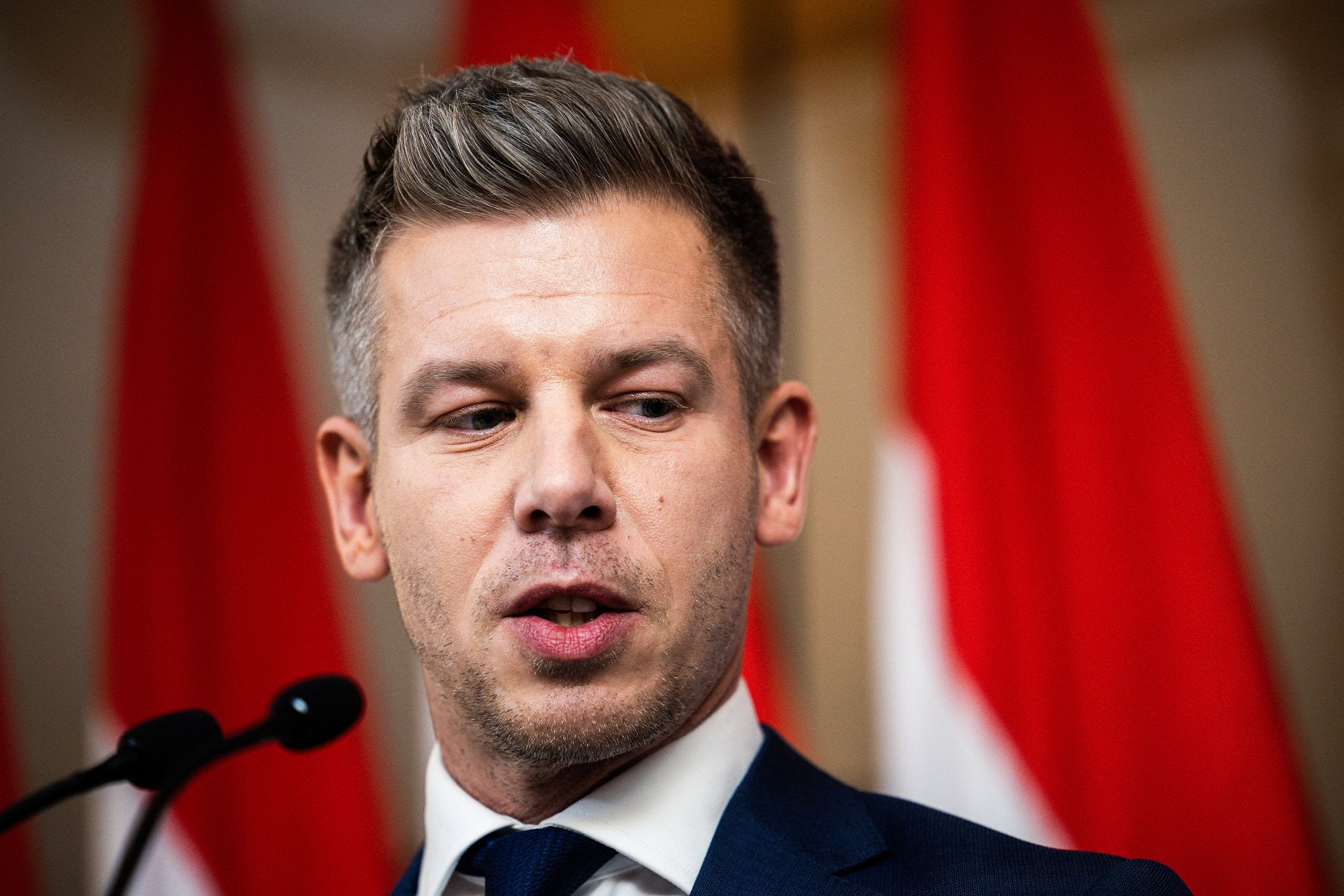
Peter Magyar, Hungary’s incoming prime minister and leader of the Tisza Party, said that Ukraine has the full right to defend itself against Russian aggression and must not be forced to cede territory.
Responding to a question, Magyar criticized narratives suggesting Ukraine should give up land, saying such arguments are “outrageous” and incompatible with the legacy of Hungary’s Hungarian Revolution of 1956. He added that those making such claims should consider how Hungary would respond if it faced a similar invasion.
Magyar’s remarks came after his party defeated Viktor Orban's ruling Fidesz in the April 12 parliamentary elections, ending Orbán’s 16-year rule. Throughout that time, Orbán had been widely seen as one of the most Russia-friendly leaders within the European Union and had blocked key support measures for Ukraine.
Magyar also rejected external pressure on Kyiv to accept territorial concessions, saying no country has the right to demand such sacrifices after years of war. He emphasized the importance of strong, U.S.-backed security guarantees for Ukraine and warned against repeating the shortcomings of the Budapest Memorandum, under which Ukraine gave up its nuclear arsenal in exchange for assurances that ultimately failed to prevent aggression.
At the same time, Magyar said his future government would seek constructive relations with all neighboring countries, including Ukraine, while raising the issue of rights for the Hungarian minority as part of bilateral dialogue.
He also pledged to reduce Hungary’s dependence on Russian energy, though he acknowledged the country’s geographic constraints and the need to ensure affordable energy supplies. While supporting sanctions in principle, Magyar suggested that Europe may reconsider them once the war ends.
Magyar added that he has already received congratulations from Volodymyr Zelensky and expects to meet him at a future European Council meeting after officially taking office.
Kremlin called Hungary an "unfriendly" country
Dmitry Peskov said Russia would not congratulate Peter Magyar on his election victory, describing Hungary as an “unfriendly” state. In comments reported by Interfax and cited by European Pravda, Peskov stated that Moscow does not extend congratulations to countries it considers hostile, pointing to Hungary’s support for sanctions against Russia.
At the same time, Peskov acknowledged that Russia had maintained a dialogue with Hungarian Prime Minister Viktor Orban, suggesting that previous relations were more constructive. Despite the change in political leadership, he added that Moscow expects “pragmatic contacts” with Budapest to continue going forward.
Peter Magyar made statements about Russian oil imports
Peter Magyar said Hungary will continue purchasing Russian oil while working to diversify its energy supplies, emphasizing that energy security and affordability remain top priorities. He explained that sourcing oil and gas from multiple suppliers would reduce risks during geopolitical tensions and help secure better prices through competition.
Magyar argued that Hungary’s geographic position makes continued cooperation with Russia unavoidable, noting that proximity plays a key role in energy decisions. At the same time, he stressed that diversification does not mean cutting ties entirely, but rather ensuring stable and cost-effective access to resources. According to him, buying energy from several directions — “east, west, and south” — would strengthen resilience and bargaining power.
He also pointed out that EU sanctions against Russia remain in place while the war continues, though they are occasionally eased to prevent disruptions to the global economy. Magyar suggested that once the war ends, sanctions could be lifted quickly, adding that paying higher prices for energy is not in Europe’s economic interest. While acknowledging moral and political considerations, he said Hungary aims to balance them with practical needs by maintaining a broad and flexible energy strategy.