


Russia's mass air attack on Kyiv region, injured 32 and killed 2
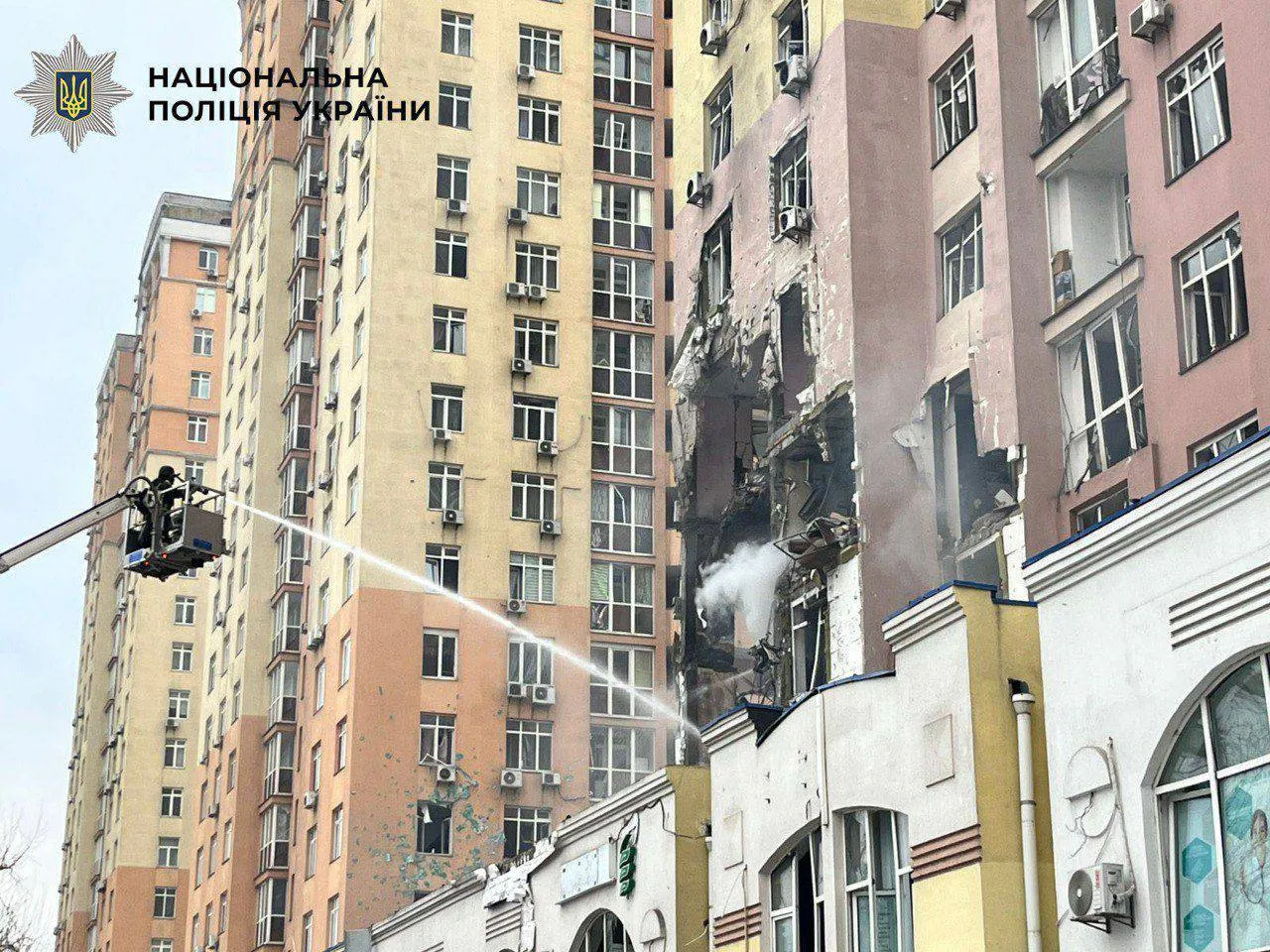
This morning, on December 27, 2025, Russia launched a massive combined drone and missile assault on Kyiv, marking one of the largest attacks on the Ukrainian capital in recent months. The barrage began in the pre-dawn hours, involving 500 hundred of drones (primarily Iranian-designed Shahed models) and various missiles, including Kinzhal hypersonic, Iskander ballistic, and Kalibr cruise types. Explosions echoed across the city as air defenses worked intensely to intercept the threats, with the nationwide air raid alert lasting nearly 10 hours until around 11:20 a.m. local time.
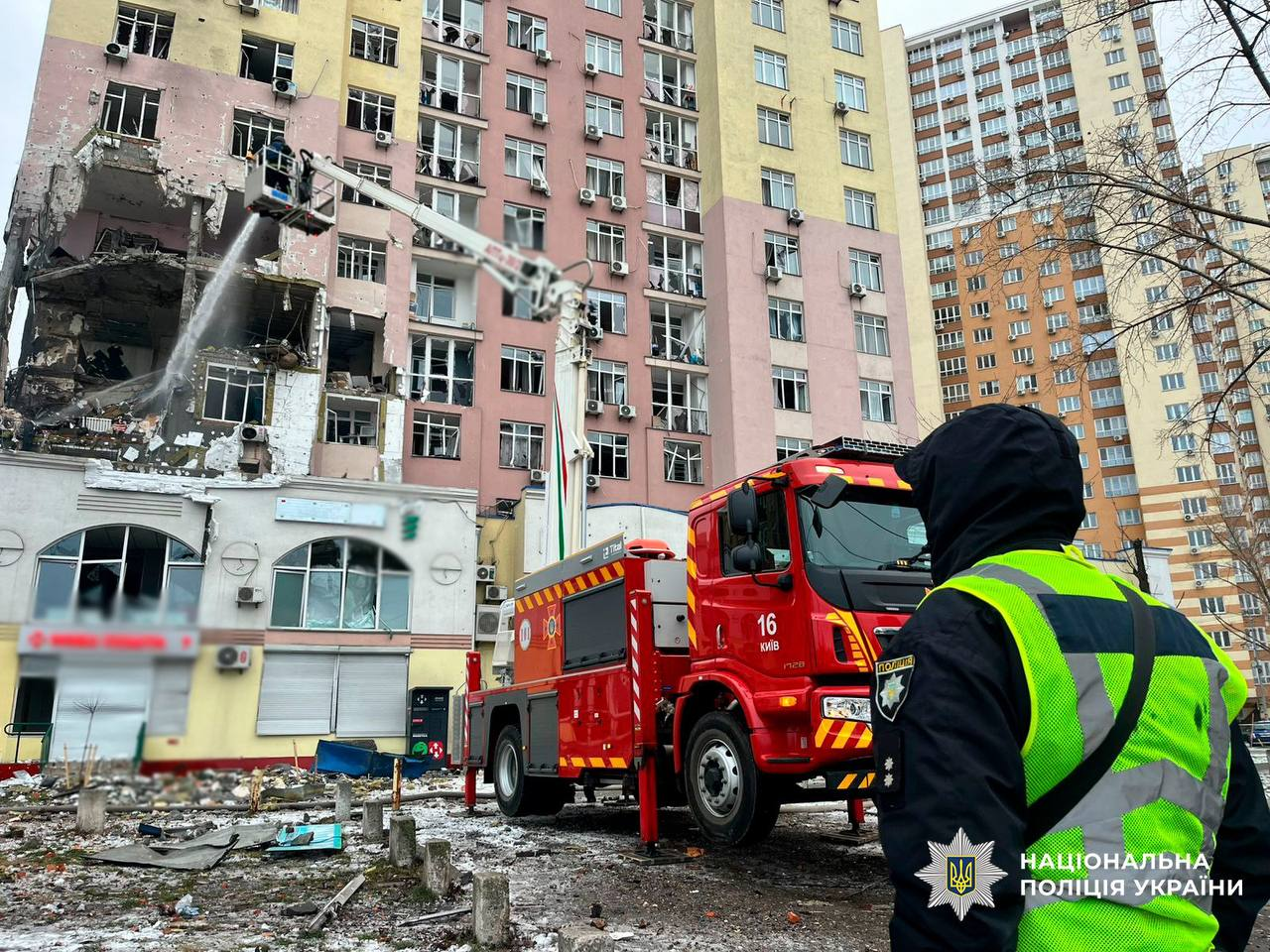
The strikes targeted critical energy infrastructure and residential areas, causing widespread damage. Fires broke out in apartment buildings from falling debris, and power outages affected hundreds of thousands of households in Kyiv and surrounding regions, leaving about a third of the capital without heat amid freezing temperatures. At least one person was killed in the broader Kyiv region, with reports of 19–22 injuries in the city itself, including two children. Emergency services responded to multiple sites, including damaged high-rises where residents were trapped under rubble.
The attack comes just ahead of a planned meeting between Ukrainian President Volodymyr Zelenskyy and U.S. President Donald Trump to discuss peace efforts. Zelenskyy condemned the timing as an attempt to undermine diplomacy, noting correlations with ongoing strikes on energy facilities. Ukrainian air defenses downed a significant portion of the incoming threats, but the scale highlighted Russia's continued pressure on civilian infrastructure as winter deepens.
Putin`s circle reacted nervously to Zelensky's Christmas address
Kremlin spokesperson Dmitry Peskov said Moscow had taken note of President Volodymyr Zelenskyy’s Christmas address, responding with sharply critical remarks about the Ukrainian leader’s tone and rhetoric.
Peskov claimed the speech was hostile and inappropriate for a holiday address and questioned Zelenskyy’s ability to make what he described as “adequate” decisions on a political or diplomatic settlement, according to Russian state media.
Earlier on December 24, Zelenskyy delivered a blunt Christmas message reflecting the public mood after nearly three years of full-scale war. Speaking about the shared sentiment among Ukrainians, the president said the country was united around a single wish — an end to Russia’s aggression and the defeat of its initiator.
Zelenskyy’s remarks underscored the depth of anger and exhaustion in Ukrainian society as the war continues, while the Kremlin’s reaction highlighted the increasingly hostile rhetoric between Kyiv and Moscow even around traditionally symbolic dates.
Russia rejects and wants to rewrite the 20-point peace plan
Russia plans to push for major revisions to the 20-point peace plan developed by the United States and Ukraine, treating the document only as a preliminary draft, according to a source close to the Kremlin cited by Bloomberg.
Moscow argues that the current version fails to address key Russian demands. Among the conditions Russia intends to press for are guarantees against NATO’s further eastward expansion, Ukraine’s neutral status even in the event of EU membership, limits on the size and capabilities of Ukraine’s armed forces, and the lifting of Western sanctions. The Kremlin is also seeking clarity on the future of frozen Russian state assets and on language-related issues inside Ukraine.
The source said Russia views the proposal as broadly reflecting Kyiv’s position but will review it “calmly” before formally responding, while insisting on what it calls fundamental changes.
Russian President Vladimir Putin has not publicly commented on the latest proposals. His envoy, Kirill Dmitriev, briefed him after talks with U.S. officials in Florida last weekend, and Moscow is expected to relay its position to Washington soon, Kremlin spokesperson Dmitry Peskov said on December 24.
Ukrainian President Volodymyr Zelenskyy has meanwhile acknowledged ongoing disagreements with the United States, particularly over territorial issues and the future of the Zaporizhzhia Nuclear Power Plant. He said Russia has floated the idea of withdrawing from parts of several regions while demanding Ukraine pull back from areas of Donetsk Oblast still under Kyiv’s control. Zelenskyy added that U.S. proposals include turning the contested area into a free economic or demilitarized zone.
According to Zelenskyy, Ukraine would retain a peacetime force of up to 800,000 troops under the plan, and any Russian violation of a ceasefire would trigger U.S. security guarantees.
The head of the Ministry of Foreign Affairs explained why the Russians have invaded Ukraine today
Ukraine’s Foreign Minister Andrii Sybiha has commented on Russia’s attack on Ukraine on 27 December, linking it to the timing of upcoming talks between U.S. President Donald Trump and Ukrainian President Volodymyr Zelenskyy.
Writing on the social media platform X, Sybiha said that the strikes were deliberately timed.
“Putin deliberately ordered the massive bombardment of residential areas and critical infrastructure in Kyiv at a moment when the leaders of Ukraine and the United States are preparing to meet and advance peace efforts,” the minister stated.
Sybiha warned that Russia’s continued rejection of peace would have serious consequences.
“Putin must understand that refusing peace will come at a high cost for him and his regime. The United States, Europe, and other partners have sufficient leverage to raise that price — both for the Russian economy and through increased losses on the battlefield. Russia will face a sharp escalation in both,” he added.
Russia is blocking the peace process - ISW analysis
Russia’s leadership has once again demonstrated a complete lack of willingness to end the war through diplomatic means. The Russian Foreign Ministry has openly stated that the Kremlin does not intend to sign any ceasefire agreements “at this time,” despite signals suggesting possible progress in negotiations.
The Institute for the Study of War (ISW) outlined this assessment in its recent report.
Moscow has categorically rejected the 20-point peace plan presented by Ukrainian President Volodymyr Zelensky on December 24 following consultations with the United States and European partners.
Russian Deputy Foreign Minister Sergei Ryabkov said it was “impractical” to set any concrete timelines for a peaceful settlement. He also attempted to shift responsibility by portraying Ukraine’s and Europe’s diplomatic efforts as obstacles to peace.
Russia’s Foreign Ministry complained that Ukraine’s peace plan is “radically different” from Moscow’s demands and confirmed the Kremlin’s intention to continue fighting until its objectives are achieved.
ISW analysts emphasize that Russia’s underlying goals remain unchanged: the destruction of Ukraine’s military capabilities, the overthrow of Ukraine’s legitimate government through forced capitulation, and the elimination of Ukraine’s sovereignty.